
What Is Money?
Understand what money is, why we use it, and the 3 important jobs it does in our daily life.
1. Imagine a village with no money
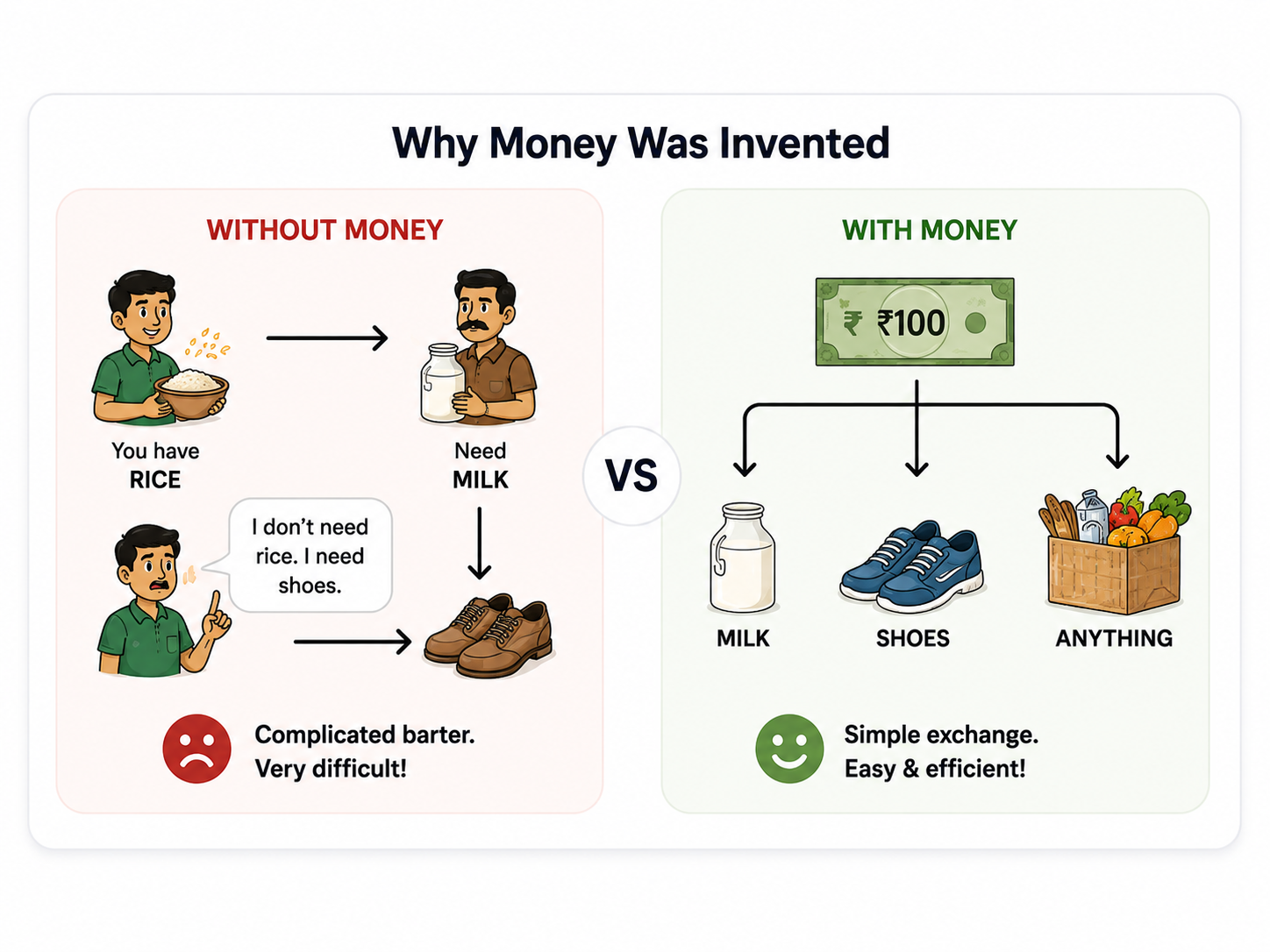
You grow rice. Your neighbour has milk. You want milk, so you offer some rice.
But your neighbour says, “I already have enough rice. I need shoes.”
Now you need to find someone who wants rice and has shoes. This is called barter. It takes time, is not easy, and often does not work.
Humans needed something that everyone could accept. That something became money.
2. So what exactly is money?
In very simple words, money is something people agree to accept in exchange for things.
You work. Your company gives you money. You give some of that money to a restaurant for food, your landlord for housing, an airline for a ticket, or your bank to repay a loan.
Money works because of trust + acceptance + the financial system behind it.
3. Money vs Wealth
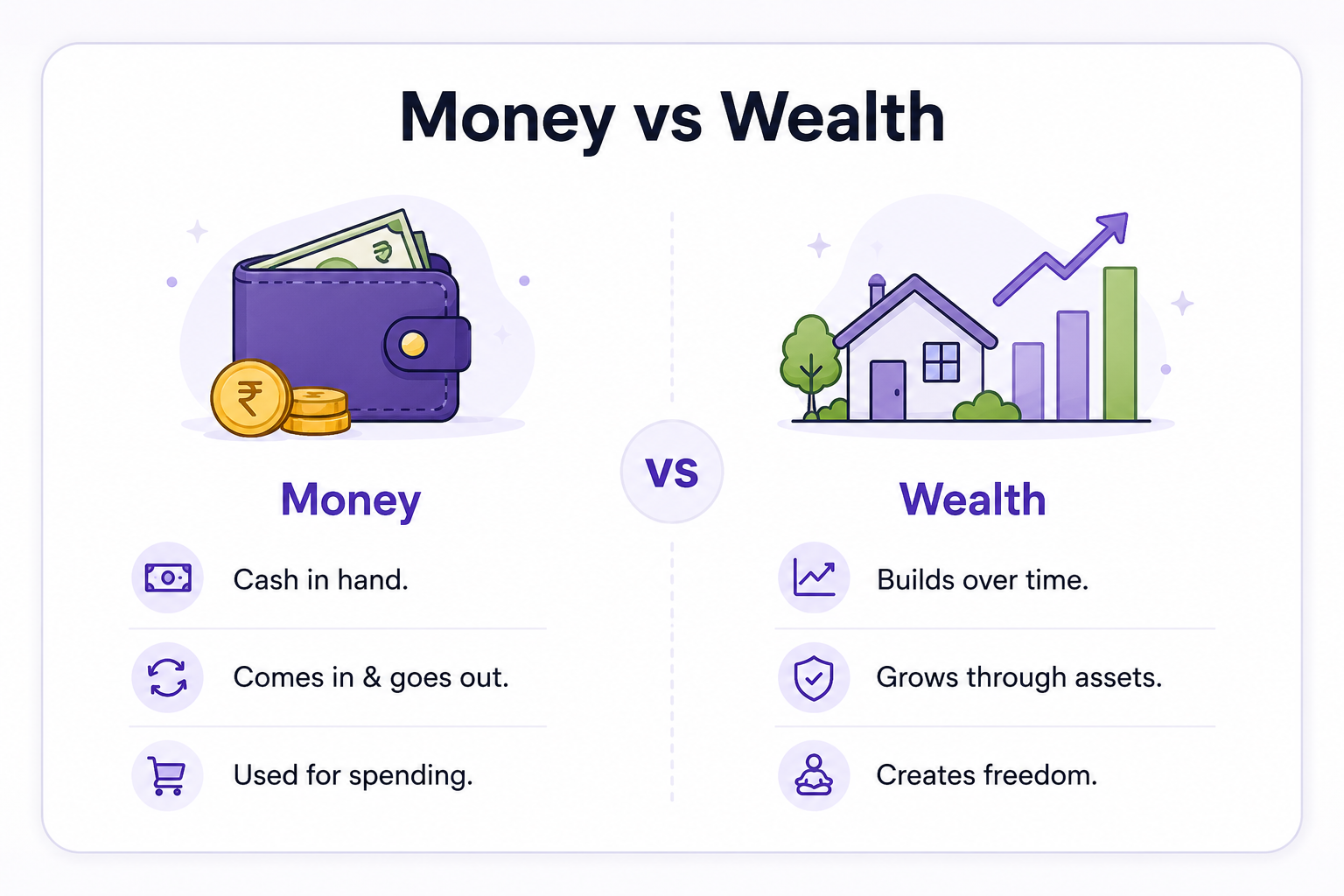
Money is what you can spend or hold today. Wealth is what you build over time through assets such as savings, investments, property, skills and businesses—after considering what you owe.
Someone with a large salary can still have little wealth if most of the money disappears into expenses and debt.
4. Where does your money go?
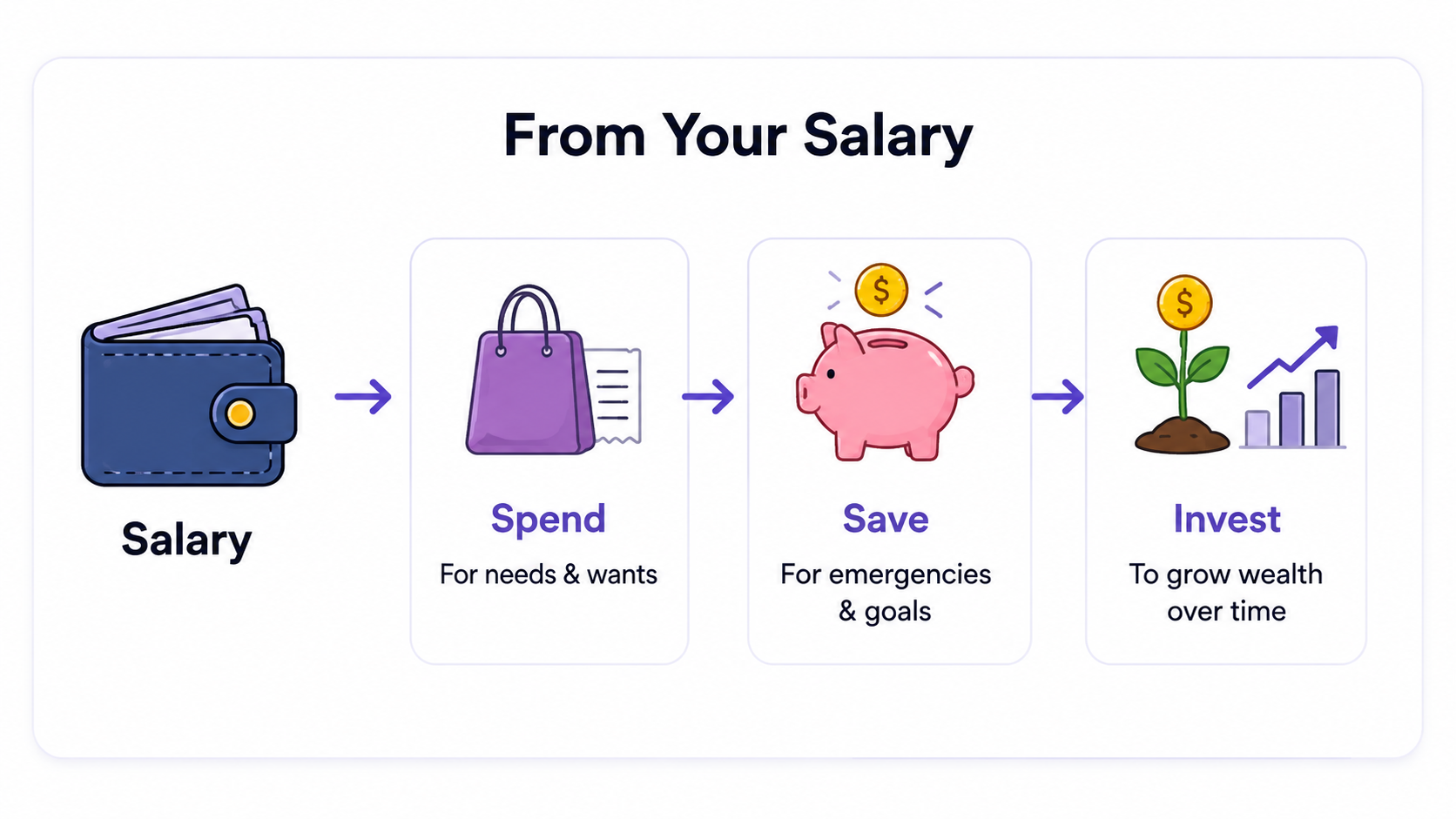
Imagine your salary arrives today. That money can take several paths. Some is needed for today. Some protects tomorrow. Some can be invested to build wealth over time.
Real-life example
You earn ₹70,000. You use ₹35,000 for essential expenses, ₹10,000 for wants, ₹10,000 for emergency savings and ₹15,000 for investments. The goal is not to copy these numbers—the goal is to understand that every rupee can be given a job.
The 3 jobs of money
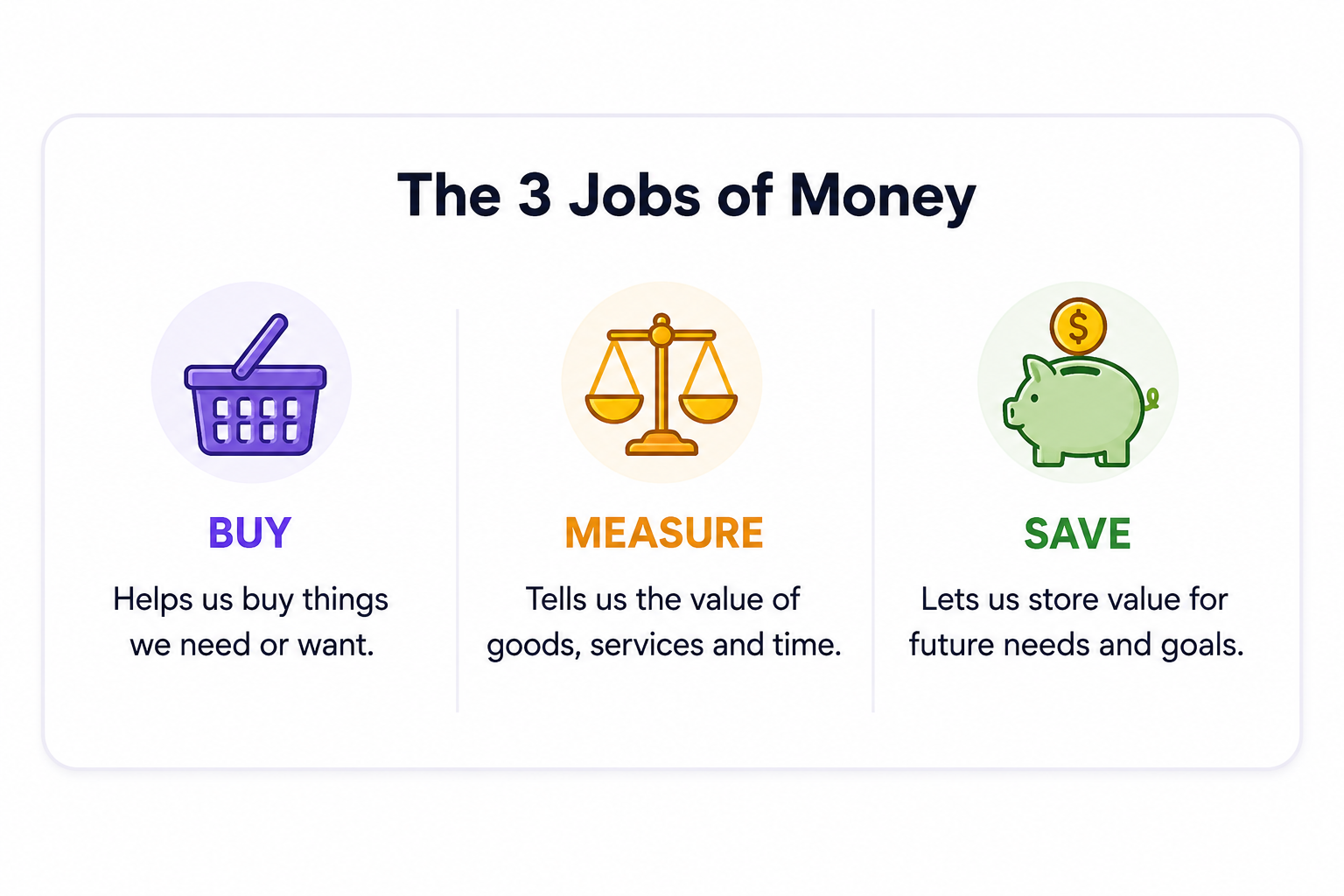
Buy: exchange money for goods or services.
Measure: compare prices using a common unit.
Save: hold value for future needs.
5. Quick check
What is the main reason money made exchange easier than barter?
Answer: B