
Needs vs Wants
Learn how to separate essentials from extras so you can spend wisely without feeling guilty about enjoying your money.
1. What is a need and what is a want?
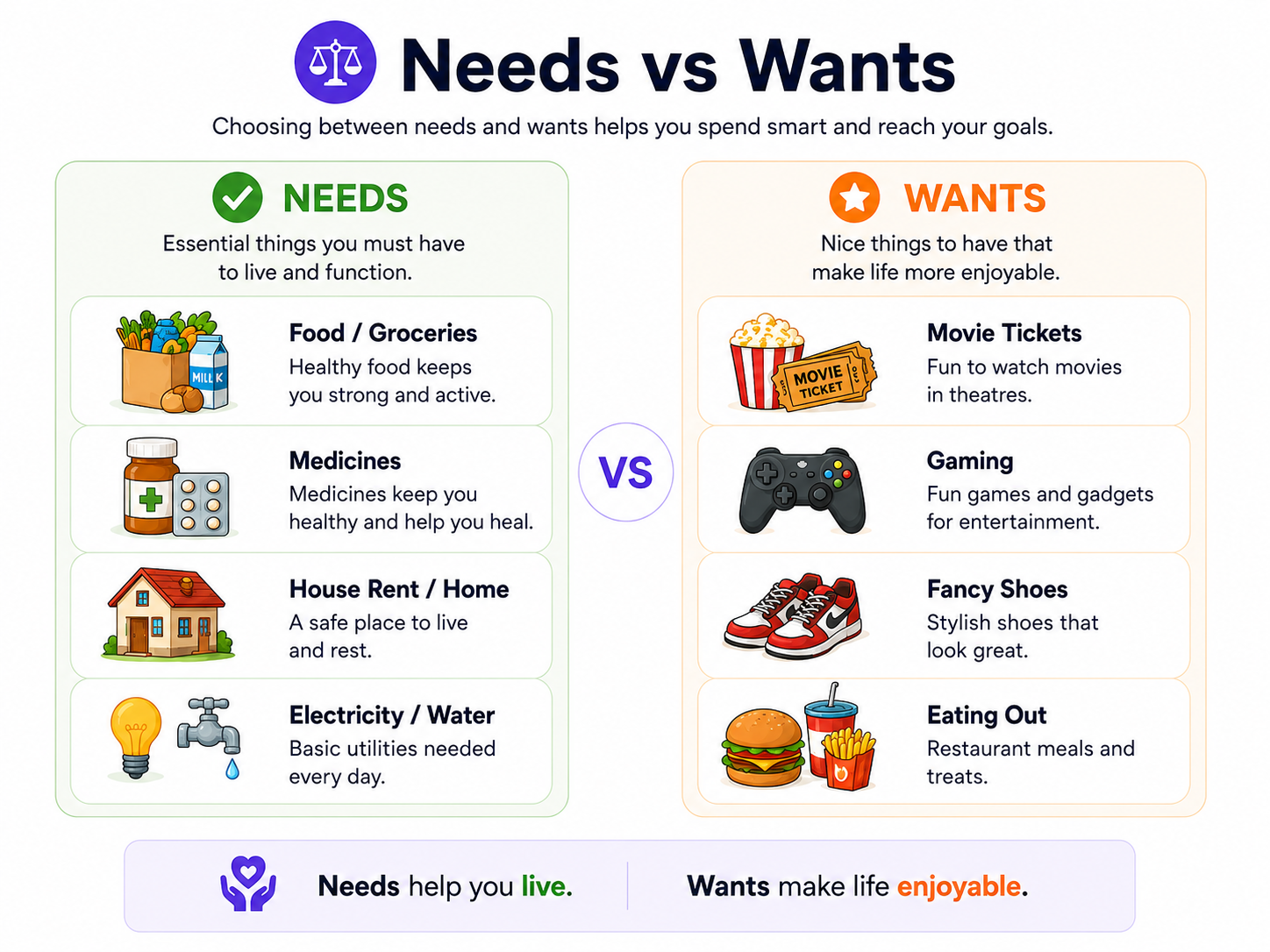
Needs are things required for you to live, stay healthy, remain safe or function in daily life. Wants improve comfort, convenience, status or enjoyment, but life can usually continue without them.
Food is a need. Ordering an expensive restaurant meal is usually a want. Clothing is a need. Buying another premium pair of shoes because you like the design is usually a want.
2. Needs first, wants later
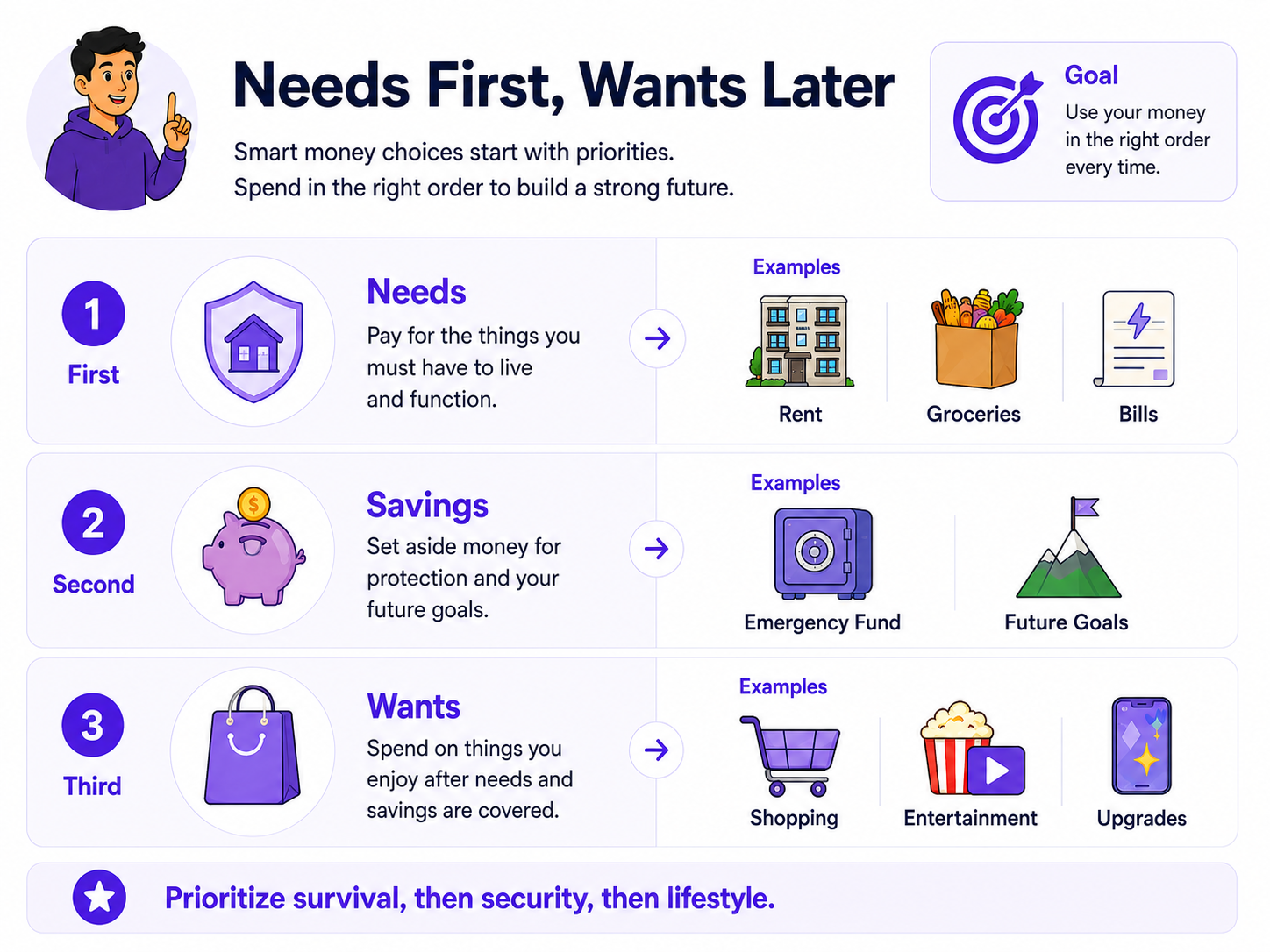
A useful spending order is:
Needs → Savings → Wants.
First protect the things you must pay for. Then set aside money for emergencies and future goals. After that, spend on wants with the money you have deliberately kept available for enjoyment.
Wants are not bad
Entertainment, travel, dining out and hobbies can make life better. The problem begins when wants regularly consume money needed for rent, debt payments, emergency savings or important goals.
Needs can still be optimized
A need does not mean “spend any amount.” Housing is a need, but an unaffordable home can still damage your finances. Food is a need, but spending excessively on delivery is not necessary.
3. Give your income a plan
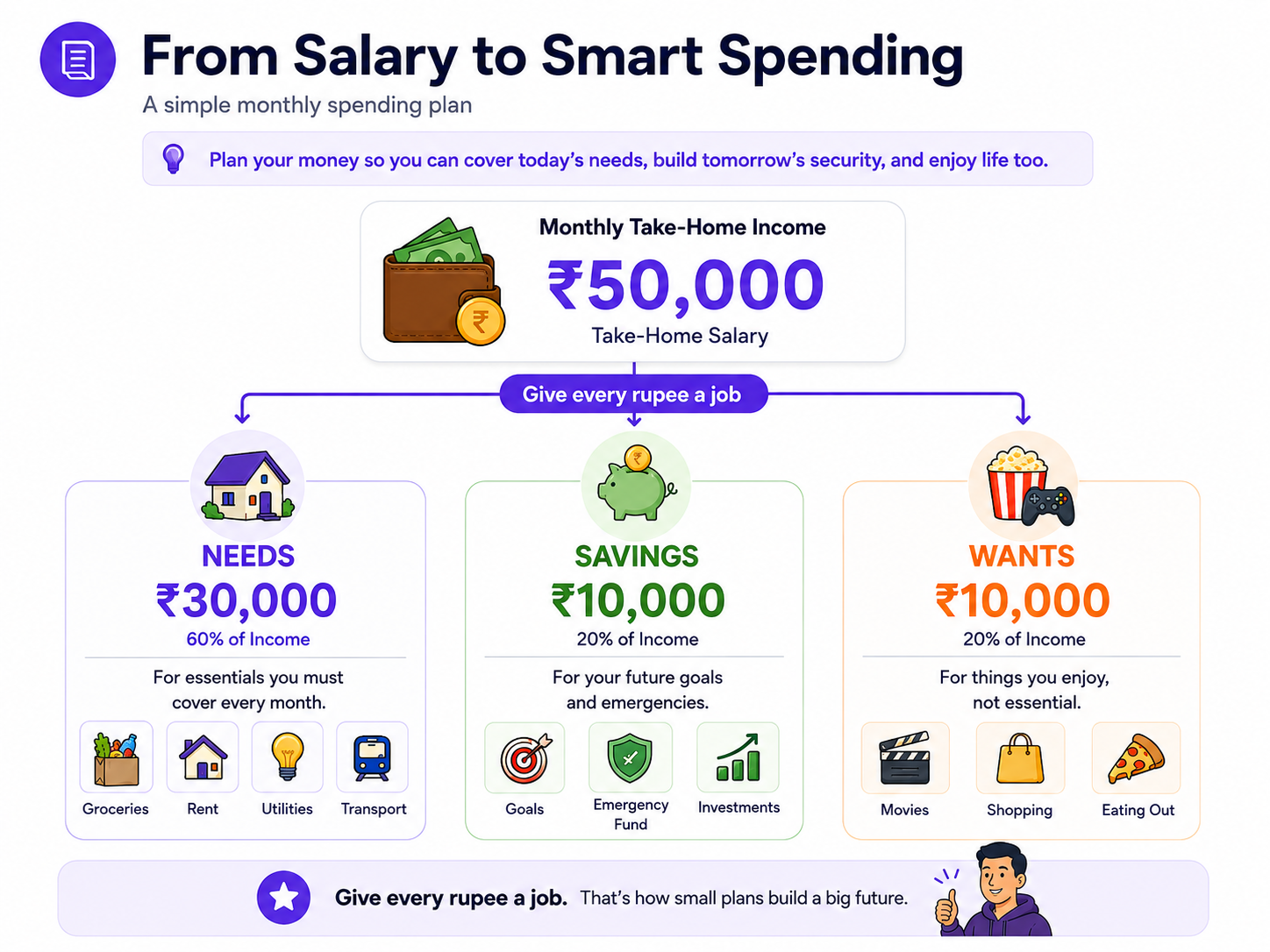
Imagine your monthly take-home income is ₹50,000. One possible plan could be ₹30,000 for needs, ₹10,000 for savings and ₹10,000 for wants.
Those percentages are not a universal rule. Someone supporting parents, paying high rent or clearing debt may need a very different split. The important idea is to decide before spending instead of discovering at month-end that nothing remains.
4. Sometimes context changes the answer
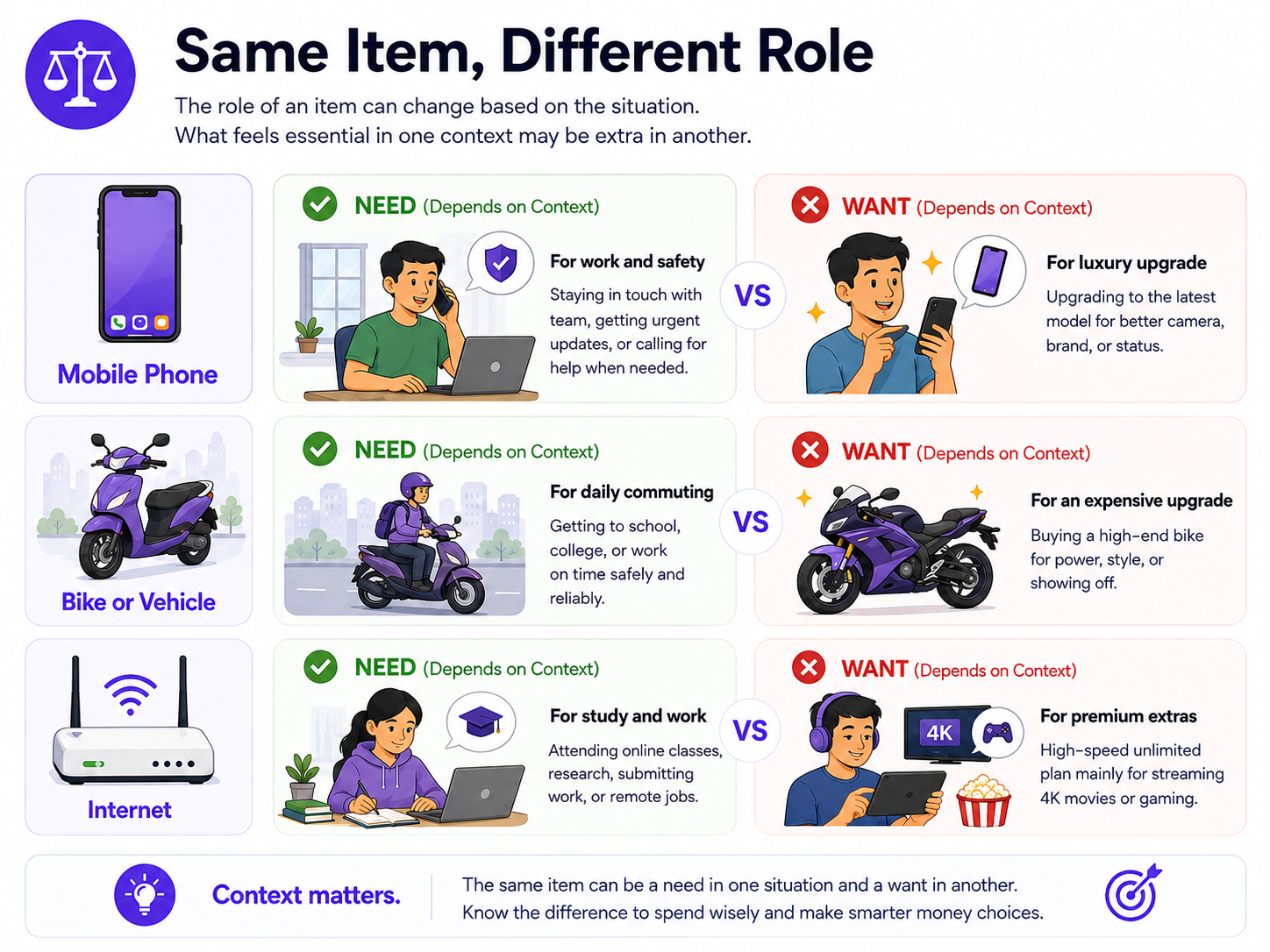
Needs and wants are not always determined by the object itself. The situation matters.
A basic smartphone may be necessary for someone whose job depends on calls, authentication apps and remote work. Replacing that perfectly working phone with the newest premium model mainly for status is a want.
Similarly, transport can be a need if there is no practical way to reach work. But upgrading from a reliable scooter to an expensive performance bike is usually a want.
5. Quick check
Arun's phone is working well, but he wants to replace it with the newest model mainly for a better camera and status. For Arun, this purchase is most likely:
Answer: B