
Assets vs Liabilities
Learn the difference between what you own and what you owe, and why this matters for your financial future.
1. What are assets and liabilities?
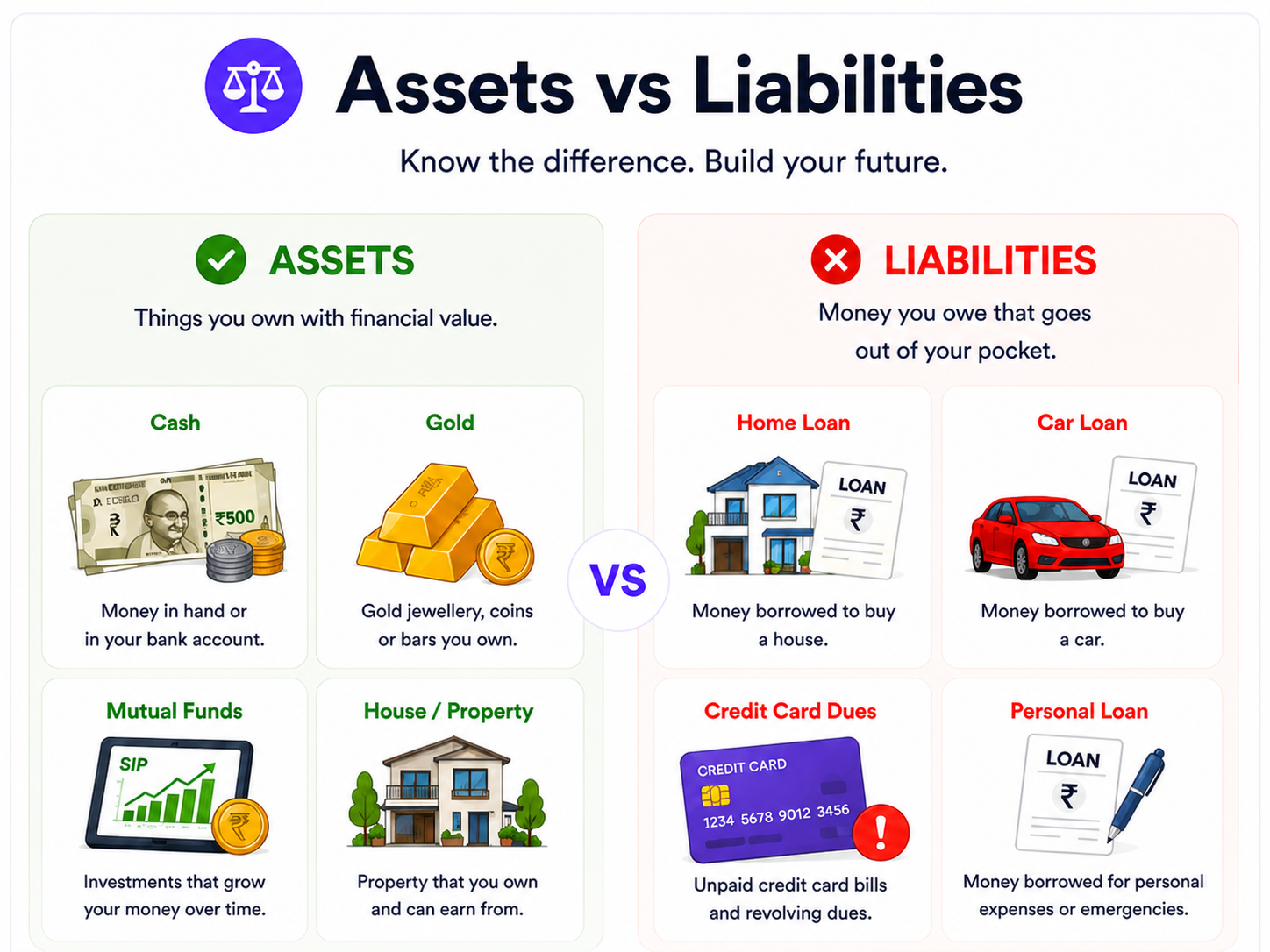
An asset is something you own that has financial value. Cash, bank balances, gold, investments and property are common examples.
A liability is money you owe. Home loans, vehicle loans, personal loans and unpaid credit-card dues are common examples.
The simplest memory rule is: assets = what you own; liabilities = what you owe.
2. One purchase can create both
This is where the idea becomes more useful.
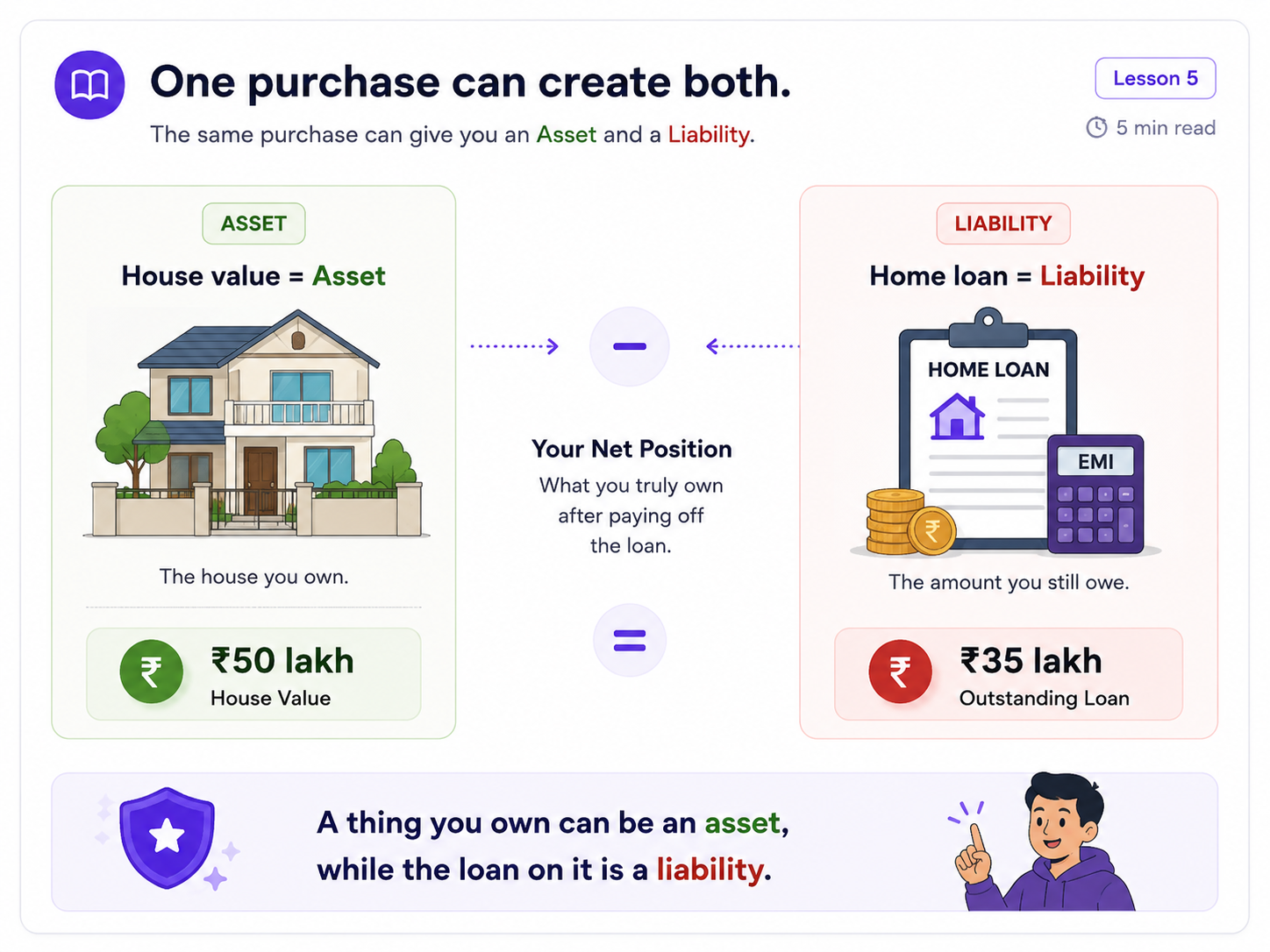
Imagine you buy a house worth ₹50 lakh using a home loan. The house itself is an asset because it has value and belongs to you. But if ₹35 lakh of the loan is still outstanding, that ₹35 lakh is a liability.
So the same financial decision can create both an asset and a liability at the same time.
Asset value can change
An asset is not guaranteed to rise in value. A vehicle usually loses value over time. Stocks can rise or fall. Property prices can also change.
Liability falls when you repay
As you repay principal on a loan, the outstanding liability reduces. Interest is the cost you pay for using borrowed money.
3. Does it help you or drain you?
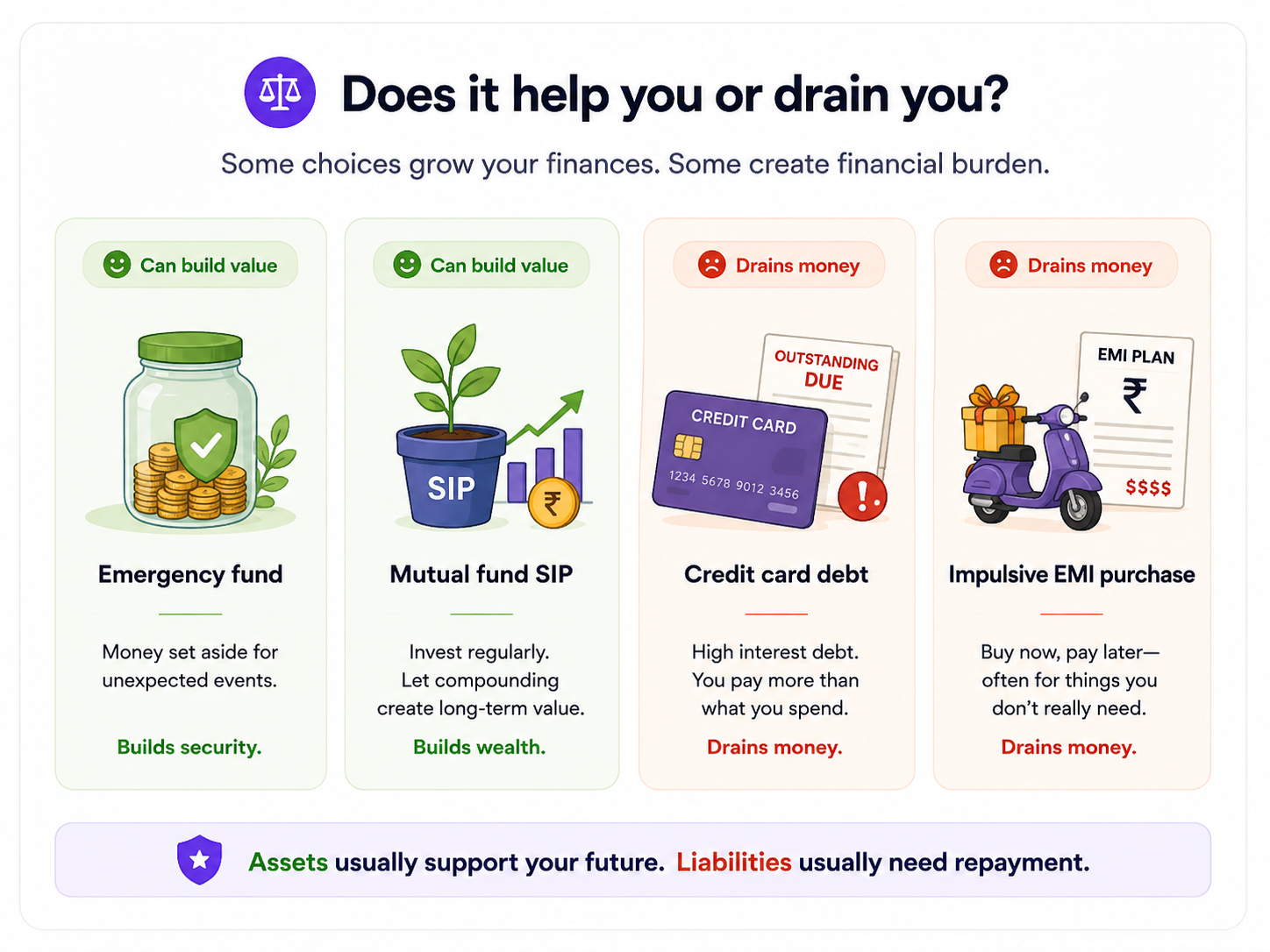
You may hear a shortcut like “assets put money in your pocket and liabilities take money out.” It can be useful for thinking about cash flow, but it is not the formal accounting definition.
For YPA Varsity, keep the two ideas separate:
Asset/liability tells you what you own and owe. Cash flow tells you whether something is currently bringing money in or taking money out.
4. Build a simple personal balance sheet
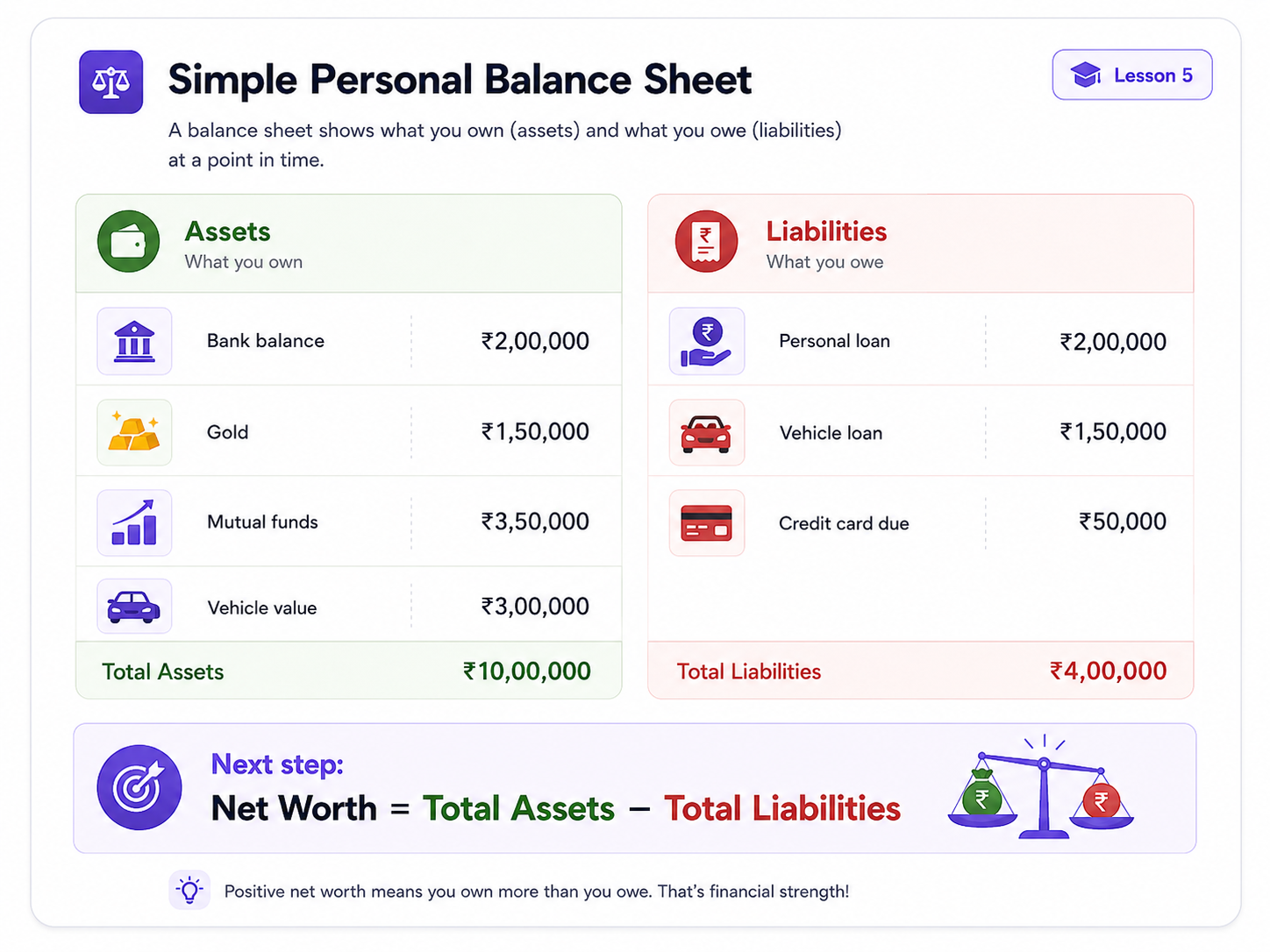
A personal balance sheet is simply a snapshot of your finances at one point in time.
On one side, list the current value of things you own. On the other side, list the amounts you still owe.
For example, if your assets total ₹10 lakh and your liabilities total ₹4 lakh, the difference is ₹6 lakh.
5. Quick check
Which of the following is a liability?
Answer: C — it is money you owe.